
09/03/2016
I stood in a corner of the giant stage, behind a crawling queue of devotees waiting for 'amma's' hug. I was hunched in despair, feeling like a giant impostor, wedged between the deep urge to run away and the desire not to fail the kind man who had gently insisted that I meet 'amma' after our interview on his research at the ashram. Before I could make up my mind, I was gently nudged forward and asked to kneel. I refused. In a flash, I found myself seated in a chair and then, enclosed in a gentle hug by the 'amma' who whispered in my ears, "molutti" (dear daughter) thrice. I walked away wondering what about that pleasant but rather unremarkable hug would stimulate in anyone, a life-long devotion for 'amma' who seemed kind of nice, but little else.
This question recurred when 2008 brought in the arrest of Santosh Madhavan, a self-styled god man, for alleged money laundering and sexual exploitation, throwing the lid open on Kerala’s crippling dependency on its godmen and women. In the years since, much has been written intermittently on the hydra-headed industry of human gods in Kerala. But we have very little, if any work exploring the malayalee psyche that seems as hooked onto its human gods as it is with the serial tear-jerkers and Beverages Corporation outlets. It’s time to resist the impulse to call this 'divine' obsession as just another gullibility of the literate Malayalee whose foibles range from Manchiyam to Manichan and from Sarita to Santiago Martin. It is time to confront the possibility that we might be a society in the throes of a deep and severe distress. If so, where is it coming from?
We might find some clues in the words of a German philosopher whose photos we have grown up seeing in tea stalls, classrooms and libraries of Kerala. In his Communist Manifesto, Karl Marx despaired about the dissolution of old moral bonds, of the old family relations, of everything that was solid in one's life, with the advent of capitalism. While not romanticizing the past nor demonizing capitalism, we must consider the possibility that Kerala is reeling under a series of such fragmentations. The sudden rupture rising from our society’s shift from a slow trot to a sudden sprint fuelled by the migration-steroid in the 80s has not been without side effects. Nor was the jolt any less when this deeply traditional but highly educated society imbibed a heady millennium cocktail of capitalism, modernity and globalization.
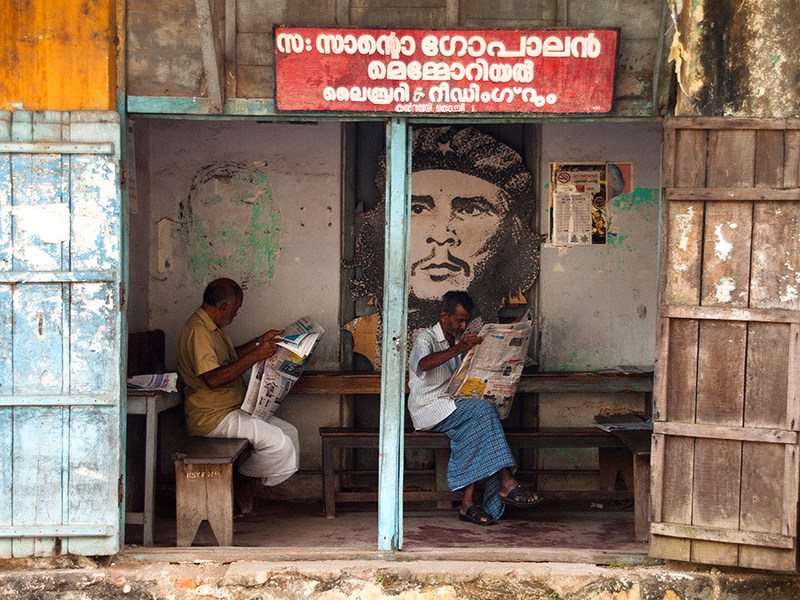
The rupture of the 80s has cut our moorings from the traditional koottu kudumbam (joint family), the soothing rhythms of an agrarian life, and the communion of naalkavalaas (four way crossings). As we transitioned into nuclear families, many of us left behind our parents and grand parents, the traditional authority figures; from the four-way crossings and expansive paddy fields, life shrinked to the four walls of our rooms. Don’t get me wrong. I don't find anything inherently romantic about a joint family or an agrarian life; the transition was inevitable. Societies have been through this before. They would find new authority figures in sports heroes, civic leaders and celebrities; new rhythms in fast-paced urban life and extended families in new friends. But the educated society of Kerala was soon to lose faith in its new authority figures in politics, film and sports. The deeply conservative ethos didn’t allow youngsters to find meaningful friendships beyond their immediate circles. The de-industrialization of the State pre-empted the growth of a cosmopolitan urban culture. We transitioned too soon and too much, crippling our ability to find new moorings for the ones we abandoned.
It is therefore not surprising that we were ill-prepared for globalization that robbed us of any remaining semblance of predictability, stability and security in our lives. Globalization was just another change, which required our society to organize in new ways as many others did. But we are a society lost in transition; already too tired, too overwhelmed, too unprepared from the last rupture. This overwhelming stress has led some of us into alcohol, some into depression and many others into the embrace of human gods who promise us a genuine human connection and undivided attention.
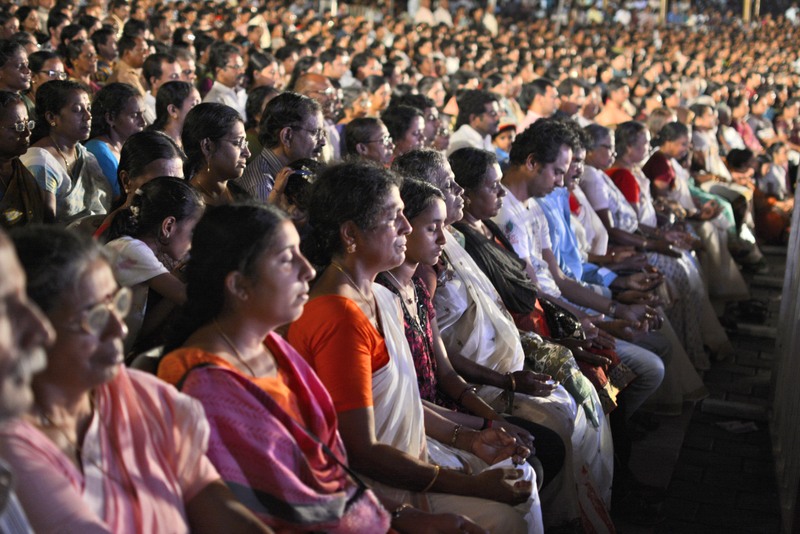
Why would anyone turn to a stranger for solace when they have families and friends around? In her book, 'the Art of Asking,' Amanda Palmer, an American singer, speaks of how her years as a self-employed living statue at Harvard Square made her realize people’s desperate need for human connection. Few minutes of eye contact with her often brought tears of joy to the eyes of people for the bliss of having felt a connection with another human being in the sad, lonely thoroughfare that was everyday life. As a graduate student living continents away from my husband longing for his gentle hug, I now realize why people would pledge themselves to 'amma' in exchange for a hug. Sometimes, life can seem so crushing and cruel that even a genuine hug could reaffirm one’s existence and one’s faith in humanity.
But the key is in realizing that our newfound obsession with human gods and everything else that money could buy are but cheap and dangerous substitutes for the love, togetherness and security that we lost. It is time we confront the dysfunctionalities of our family and social system and start the exploration of a new and meaningful way of existence in a new world. Till then, in the vibhoothi the godman conjures out of thin air, malayalee would see redemption of everything he has lost into it – stability, security and sensitivity.
(Photo credit: Evgeni Zotov via Foter.com / CC BY-NC-ND)