
27/04/2016
How do you translate a story of sex and sexuality into the medium of cinema? This was the general curiosity surrounding the making of Leela, part perceived, part generated and marketed by the industry that popular cinema ultimately is. The makers of this film were able to tap into this curiosity and make Malayalees wait with bated breath for the arrival of something the audiences thought was going to be another titillating spectacle. But the movie only left the audience with an uneasy silence; many of the viewers squirming on their seats had an angry look, as though their personal 'morality' had been violated. Of course, it's not a feminist film. The woman continues to be a victim in Leela, passive, unresisting, traded and consumed by innumerable male desires. But then what else do you expect from a Ranjith film?
Nevertheless, pale, emaciated, raped by her own father, Leela is a girl who through her passivity, points a finger at the Malayalee's hypocritical notions around the conjugal family, the patriarchal paradise which mothers want to so sustain that they would rather hush up the brutal violence against their daughters than break their 'sacred thali' thread. Girls need not be sexually raped in families, but there is so much of violence in policing their bodies and desires, in regimenting their movements and dreams, in shackling them to the rigid structures of conventional mores and a conventional education. The dysfunctional family is highly symbolic in Leela: the mother paralysed in bed, the father whose drunken stupor offers him vainglorious mirages of himself as the ruler and protector of his women, and the daughter so submissive and loyal to the demands of that great ideal called the family, no matter how undemocratic it be.
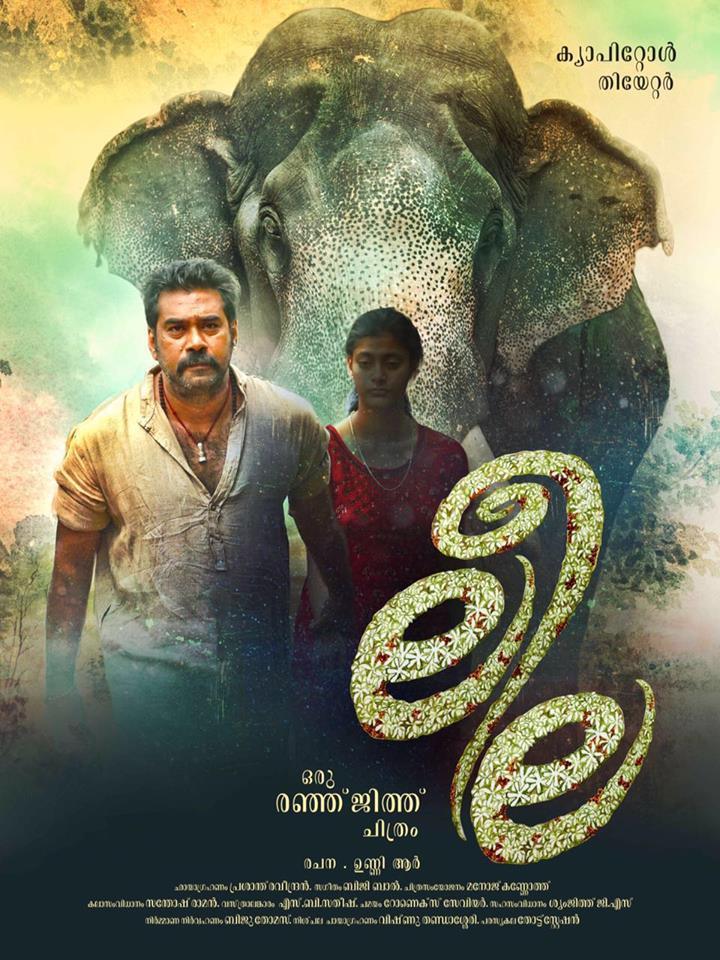
The wait for Leela had signified something else for many people. It emblematized the wish to see how a brilliant story that busted the myth of masculinity could be adapted to the largely patriarchal terrains of popular cinema. Unni R's short story was ultimately about an impotent hero. A hero who could only build narratives around his masculine prowess, whose extreme narcissism failed to take note of the reality around him, who needed the underdogs of society, sex workers and pimps, to boost his self confidence by providing him with a semblance of virile strength that he lacked in real life. The story has a hero who weaves an elaborate sexual spectacle around the 'idea' of having sex with a nubile young girl resting on the trunk of an elephant. However, the brilliance of the story is in its climax when Kuttiappan's masculinity is revealed to be an empty sign, a spectacle devoid of any meaning. It is at that moment when the impotence of the male hero, the supposed savior of his women, is revealed in all its nakedness that the majestic beast of the jungle completes the story that Kuttiappan had woven, redeeming the girl in a sexual embrace of death.
Much of our popular cinema derives its charm from the myths of masculinity and femininity it creates and seeks to perpetuate as natural and legitimate. The mark of a Ranjith scripted film, especially his trademark ones like Devasuram, Aramthamburan and Narasimham and his directorial debut Ravanaprabhu are these spectacles of masculinity. In these films, the director places his narrative of masculinity within a feudal nostalgia and therefore re-instates the erstwhile 'lords' and 'thamburans' (whom we fought to banish from a civil society) squarely back into the popular imagination. From the early 1990's onwards, this sparked off a cult of hegemonic masculinity in Malayalam cinema, where a mustache twirling, aggressive and sexually virile hero lords it over the masses and also his women. Though Ranjith tried to step away from such nauseating performances of masculinity in his later movies, the spectre he had unleashed upon Malayalam cinema proved to be its bane. These colossal masculine ego ideals became a social barometer as far as many Malayalee men and women were concerned.
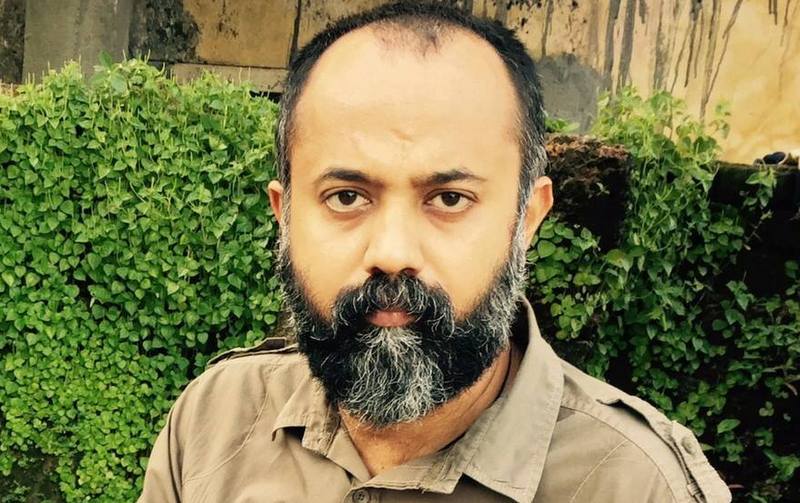
Unni R
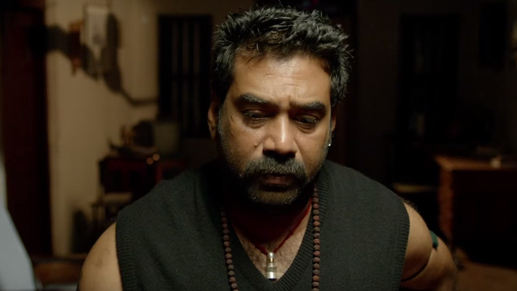
I'd hoped that by adapting Leela, Ranjith would be able to bust the very same myth he had helped entrench in the minds of the Malayalee audience. However, it's the politics of popular that triumphed to a certain level at the cost of Unni R's story that had carried the seeds of an extraordinary subversive energy. The impotent Kuttiappan with the elaborate rituals he builds around his narcissistic sexual ideal, the bubble of which is pricked in the end of the story, is exchanged for a protagonist, played to excellence by Biju Menon, who is a bundle of eccentricities which are affordable to him because of his rich lineage. However, the film tries to project him as a savior, and the climatic sequence has him declaring that he will give a life to the poor, hapless Leela by taking her home with him, implying a wedding. The short story's impotent hero has a clever makeover in the film in the image of a hero with a heart of gold. For the discerning spectator, Kuttiappan's eccentricities are clues to an extreme narcissism as is subtly suggested in the story. But the film fails to develop that. Thus, a movie which had the potential of busting the bubble of hegemonic masculinity in Malayalam cinema capitulates to the logic of the average movie buff and falls short of it.
However, it's in a marvelous casting that the movie triumphs. Biju Menon, through his easy intuitive acting, impressive voice modulation and a brilliant affected machismo, is a pleasure to watch, though this performance hasn't elicited the best from him. The black humor that was such a characteristic feature of the literary Kuttiappan is missing in the filmic counterpart, who is more somber in his efforts to sustain the bravado. Vijayaraghavan dazzles the eye with a stunning performance, so subtle and underplayed that he looks too natural to be cinematic. Jagadish is stunning in probably what could be his all-time best performance. Indrans pulls off an extremely convincing characterization with consummate artistry and control. Parvathy Nambiar is haunting and ethereal, bestowing an almost surreal effect on the film.
If the short story exposes the spectacle and drama built around notions of a virulent manhood and reveals the very constructedness of the idea of the omnipotent male, the film, while struggling to adapt this plot, actually betrays the quintessential anxiety of popular cinema – How to sustain our myths of masculinity, no matter how crisis ridden they are?