
21/01/2016
For generations, Malayalees have seen two political fronts alternately taking control of their state. But elections this year could well throw up a surprise – a hung assembly.
After the polls slated for the second quarter, the ruling Congress party led United Democratic Front and rival Communists may fall short of the tally needed to form a government, as a resurgent Bharatiya Janata Party looks set to send its law makers to the state assembly for the first time. The BJP, bolstered by its better-than-expected performance at the local body elections in November, is likely to win four to seven seats, political analysts say.
The Congress and allies took power in 2011 by winning 72 seats, four more than the Left Democratic Front. It’s unlikely that both the groups would perform significantly better this time; the Congress is grappling with allegations of corruption and scandals, while the Communist party has its own share of factionalism to deal with. The BJP, meanwhile, is getting its act together under a new state chief, Kummanam Rajasekharan, a dyed-in-the-wool Rashtriya Swayamsevak Sangh campaigner.
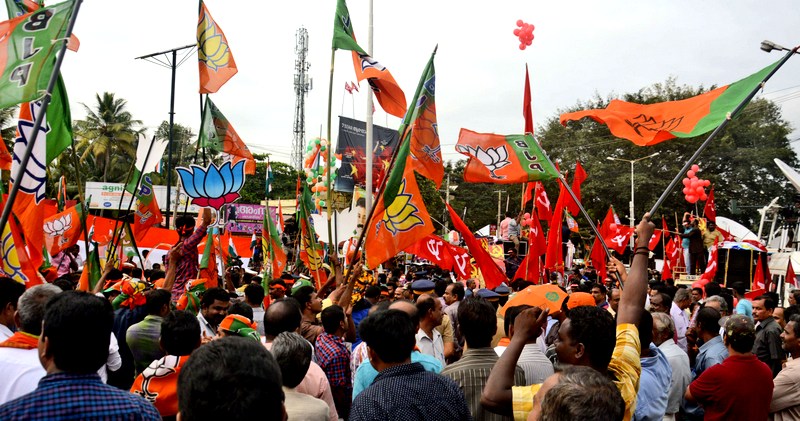
"There is every possibility for a hung assembly after the election," said P. Rajan, a Kochi-based political analyst and a former journalist, who expects the BJP to win as many as seven seats. "If there are anti-communal sentiments, there is also an anti-corruption move that would help the BJP."
In the November elections, where the LDF won more than half the 1,199 civic bodies, the BJP boosted its overall vote share to 12% from 6.1% in 2010. The party also won control of a municipality and 13 village panchayats, compared with just two village panchayats in 2010.
It bagged 35 seats in Thiruvananthapuram Corporation, trailing only the LDF, and fueling speculation it might win at least a couple of assembly seats in the district. Analysts also bet the party stands a chance to win some constituencies in Kasargod and Palakkad.
In the Aruvikkara by-election in June, the BJP’s votes more than quadrupled to 34,145 out of an electorate of about 185,000.
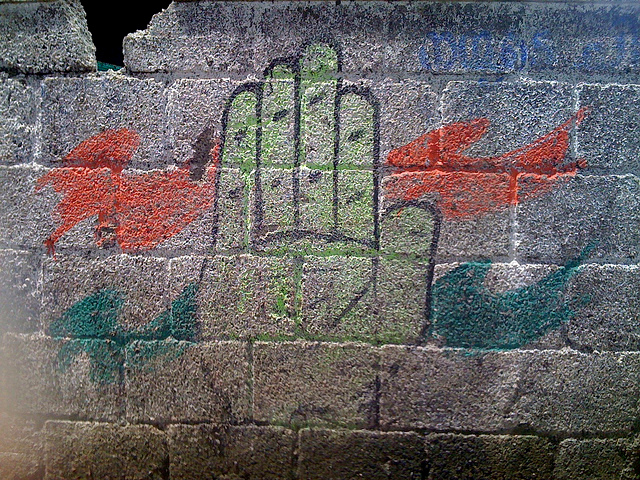
Photo credit: karmadude via Foter.com / CC BY-SA
"There is a communal polarization in the state that was visible in the last local body elections, and that would benefit the BJP in the assembly polls," said A. Jayashankar, a political observer. "Therefore, it won’t be a surprise if it wins three or four seats. The party would also be a decisive factor in many constituencies."
To be sure, political equations can change in the run-up to the election and after, which would let both the UDF and LDF cobble together new alliances and prevent a stalemate. People’s disappointment over the performance of Prime Minister Narendra Modi’s federal government that stormed to power in May 2014 with promises of major reforms, and perceptions that Hindu fundamentalism has been rising since the Modi administration took over, could also damp the party’s chances in Kerala where Muslims and Christians are significant vote banks.
"The situation may not be the same in the assembly election," said activist and writer C. R. Neelakandan. "Victory depends on situations at a particular time, the candidates contesting, and those who oppose them. There is little chance for the BJP to open account in the Kerala assembly."
The last time Kerala had a hung assembly was in 1965, when none of the political parties could claim a majority after a fractured verdict. That put the state under the president’s rule for two years.
(Main photo: Cleavers via Foter.com / CC BY-ND)