
11/02/2016
Big, palatial houses. Opulence in concrete and brick. Cars that are traded by the day for bigger and better models. The average middle-class Malayalee seems to be having a great time. No one seems to be complaining.
But a recent road trip from one end of this tiny state to the other left me terribly disturbed and disillusioned. Garbage, strewn left, right and centre (pun intended)! Literally littered in the most casual and brutal manner possible. All the water bodies in the state seemed to be teeming with plastic and inorganic waste. The roads had rotting heaps of waste on either side where poor strays with carious teeth were scavenging. An escapade into the forest proved a disaster, for our ancient, evergreen heritage was sullied by empty beer bottles and sad remnants of the traps and trappings of civilization. Kuttanad, Malayalee’s granary, has only lamentable tales to narrate. The houseboats on Vembanad, taking off into the brown smog of a rural dawn reminds one of the London Heathrow airport. The plying diesel houseboats, chic and ‘ethnic,’ a happy blend of tradition and modern luxury, leaves a trail of rotting fish with diesel in their gills and plastic mineral water bottles which echo Coleridge, “Water, water everywhere; Nor any drop to drink”.
The sad truth is that our waste heaps seem to have no owners. Paternity and maternity tests would prove futile, for the gap between waste and the producers of waste have widened with the ever broadening horizons of globalization. No one wants to know what happens to the waste he or she has generated. It is almost as though it is a shame to talk about waste. Once out of sight, one’s own waste becomes someone else’s responsibility. ‘Make in India’ and ‘Digital India’ are grand slogans. But the India one seems to be ‘making’ is also a veritable dumping ground with stink holes of garbage.
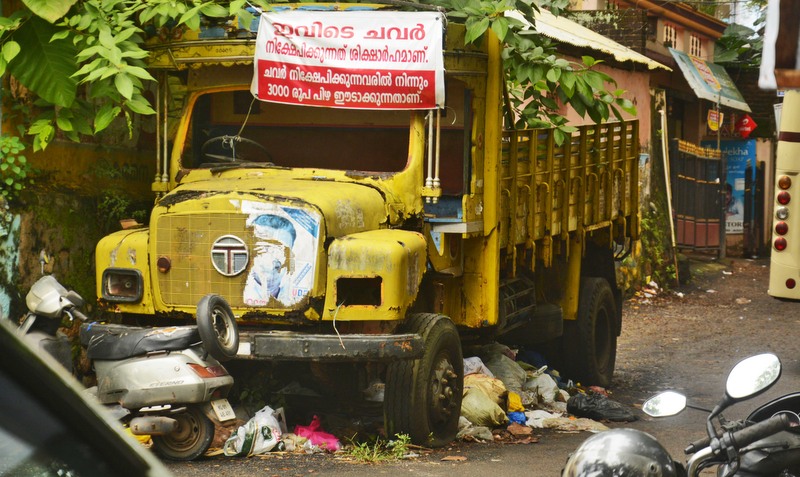
In Kerala today, I am most appalled by the fact that waste seems to be a problem increasingly associated with class. As long as the dunghill is not underneath the window of the rich, no one seems to be bothered. For the privileged classes, there is no question of who handles the waste. It is quietly piled and secreted away, only to be dumped in someone else’s backyard. Vilappilsala in Thiruvananthapuram is a classic example on a mega scale. The collection of waste still happens as far as the rich and the highly salaried are concerned, while the poor are left with no choices but to bury their waste under their beds or burn it right under their nose.
On a trip to Gavi last week, I had a chance to talk to some of the forest officers in Plappally, which is a forest outpost en route to Sabarimala. They narrated the tales of woe that the so-called ‘spiritual’ and religious pilgrimages unwittingly inflict upon our environment. There have been numerous deaths of wild elephants on this route after consuming the plastic that lies littered on the road, strewn callously by devotees who sing hymns in praise of the Lord who sits atop his tranquil green abode. While the fear of polluting women is a veritable threat to believers, the pollutions they themselves inflict upon the so called ‘chastity’ and serenity of the environment seems too trivial to be given a second thought. While busily debating the invention of machines to test the ‘purity’ of their women who may be ‘allowed’ entry into these holy precincts, they fail to take stock of the pollution their virile masculinity seems to be engendering in these sacred woods. Kilograms and kilograms of plastic in elephant tummies should speak volumes on the Malayalee’s environmental ethics. The cloth waste dumped in the ‘holy’ Pamba river has of recent garnered a lot of media attention. The more you feel the urgency to purify yourself, the more seems to be the need to pollute the air, the water, and the land around you.
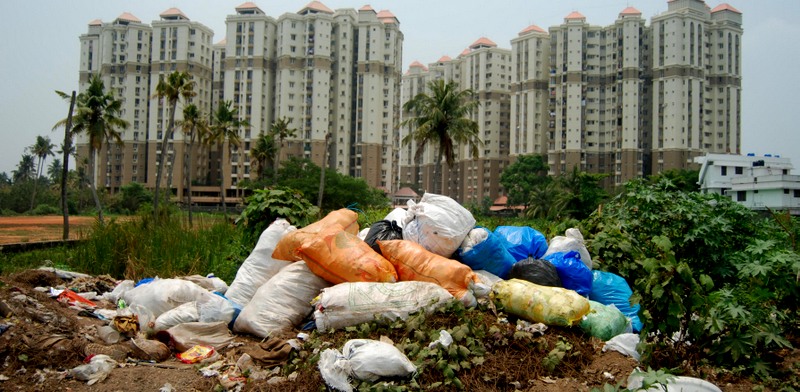
As our rivers transform themselves into black drains and stagnant pools of death, as our land soaks in the putrid waste of its own ‘high culture,’ as our backwaters and lakes become stinking holes, and the plastic heaps on river beds and ocean floors breed only dead fish and illness, we see the canker slowly spreading at the core of our society. In a land where people’s mass movements to protect environment like the Silent Valley movement was possible once upon a time, the realization is slow to dawn, that we are slowly dying. Yes, ‘God’s Own Country’ is slowly dying, choked by its own waste. Is anyone listening?